Fort Hancock Mosquito Control
FREE, No Obligation Quote. Book Your Mosquito Control Service Online Now!
Get a FREE Instant Quote
Mosquito Control Service in Fort Hancock, TX.
FREE, No Obligation Quote. Book Your Mosquito Control Service Online Now!
Mosquito Control Service in Fort Hancock, TX.
If the mosquitoes come back, SO DO WE! That’s our service guarantee*
Finding a great Fort Hancock, TX. mosquito control service company will help you and your family enjoy your backyard! Mosquito season starts in early March and will continue through October! Prime time for barbeques, pool time and enjoying the outside!
Hiring a professional is critical to ensuring that you have the best results for mosquito control. There are many DIY options as well as systems, however – hiring a local mosquito control company in Fort Hancock will give you the best protection for your yard with a mosquito control barrier.
Fort Hancock is an unincorporated community and census-designated place (CDP) in Hudspeth County, Texas, United States. Its population was 1,213 at the 2020: DEC Redistricting Data.
Fort Hancock is situated on the Mexico–United States border, across from El Porvenir, Chihuahua. The Fort Hancock–El Porvenir International Bridge connects the two communities, and the Fort Hancock Port of Entry is located on the Texas side.
Texas State Highway 20 and the Union Pacific Railroad run through the town.

Fort Hancock began as a military establishment named Camp Rice in 1882, along the San Antonio-El Paso Road. Camp Rice had formerly been located at Fort Quitman, and had been established by troops of the 10th U.S. Cavalry “buffalo soldiers”. Camp Rice did not grow after moving to this community, and rarely hosted more than 60 men. It was renamed Fort Hancock in 1886 after the death of General Winfield Scott Hancock, a hero of the Battle of Gettysburg. The fort was damaged in a flood that year, but rebuilt. It was damaged again by fires in 1889, then abandoned in 1895. The remains of the old fort are located in a cotton field about 1.5 miles (2.4 km) west of present-day Fort Hancock.
A post office was established in 1886, with Albert Warren as postmaster. In 1887, a new railroad depot was built at Fort Hancock, and by 1890, a town had grown up around it and had a population of 200, a general store, a hotel, and a meat market.
By 1914, the population of the town had dropped to 50, though by 1940, it had increased to 500.
Federal troops were sent to Fort Hancock in 1918 to contain Mexican “bandits and outlaws” operating along the border. The bandits were suspected of being directed by German agents.
In 1995, a 13-year-old Ricardo Soto “trying to get toys for Christmas” fired three rifle shots at a semitrailer traveling along nearby Interstate 10, hoping to blow out a tire so the truck would spill its load. He instead hit the driver of a pickup truck, Alberto Tarango, fatally wounding him. The man succumbed to his injuries two days later.
Officials in Fort Hancock raised the speed limit to 80 miles per hour (130 km/h) in 2006 along their portion of Interstate 10, making it the highest speed limit in the country.
In 2006, CNN did a feature story about Fort Hancock, highlighting the close relationship between families living on the US and Mexican sides of the border. In the introduction, it described how “illegal immigrants risk their lives to cross the border, but not in Fort Hancock, Texas. A casual stroll across the foot bridge gets you in there.” In an interview with Hudspeth County Deputy Sheriff Mike Doyal, he described the border as “just an open footway traffic for people coming across”, and showed one of the four unguarded foot bridges that connect Fort Hancock to Mexico. Doyal spoke fondly of his Mexican neighbors, saying “those are not the people that we have a problem with, because I’m going to make it real clear that some of those people on the other side are some of the nicest people you would ever want to meet in your life.” CNN described Fort Hancock as “a timeless place”, adding, “for people who live here, the border barely exists. We found these Mexican cattle ranchers moving their herd along the river. A few times the cows would move into the U.S., the buckaroos rode across the dried-out river and collected their animals.”
The quiescent community described by CNN in 2006 had changed significantly by 2010, when residents became increasingly concerned that violence associated with the Mexican drug trade would spill across the border. In one instance, Deputy Sheriff Doyal announced to townspeople: “We just got word that the cartel has threatened to kill children in schools across the border unless parents paid 5000 pesos.” The county’s sheriff, Arvin West, cautioned farmers to arm themselves.
The newly erected Mexico–United States barrier is not a continuous wall, but rather a segmented one, at places no more than a fence. This has led many unauthorized migrants to traverse the barrier on the Mexican side in search of a break; breaks are often in remote desert areas like Fort Hancock. This “funnel effect” has contributed to the deaths of thousands of unauthorized migrants, who are frequently found dead in the hot Texas sun. Journalist Joseph J. Kolb interviewed local rancher Lupe Dempsey, who described how “on her doorstep was a 25-year-old man named Juan who, thirsty and disoriented, told how he’d become lost after illegally crossing the border and had wandered the desert in 110-degree heat.” Kolb added, “His story was not unique to Dempsey and others in this West Texas town, where the 18-foot-high U.S. border fence ends abruptly, giving way to a few strands of barbed wire.”
Mosquitoes are usually just a nuisance, however they can lead to disease and even death. Most interactions with a mosquito lead to a bite; which leads to an allergic reaction from the mosquito’s saliva. The reality is that most people simply want to enjoy the outdoors, especially when it is their own backyard. NOMO Mosquitoes offers mosquito control services in Fort Hancock, TX.
Our teams help you get your outdoor spaces back with regular mosquito control spraying. The mosquito control service typically happens every 3-weeks and takes a couple of applications to see the full benefit. The life-cycle of a mosquito requires consistent interaction to ensure that the sprays and other baits eliminate adult mosquitoes, larvae and eggs.
If you are ready to get some of your space back, Fort Hancock Mosquito control can help! Get a real-time quote and schedule service instantly today! Get Quote NOW >>
Additional Resources
We have found a few local providers in Fort Hancock, TX that provide Mosquito Control service
This business listing service is provided by Yelp.com; all content and images are hosted on Yelp.com (https://*.yelpcdn.com/*), please direct ANY copyright infringement issues directly to Yelp.com at: https://www.yelp.com/support/contact/copyright_trademark
We have had to remove local listings due to copyright infringement violations by those companies through YELP. We will consider adding the listings again in the future once violations of material has been resolved by YELP.
If you need assistance in finding a quality Mosquito Control company in Fort Hancock, TX, please use the form at the top of the page to start.

Fort Hancock, TX. Standard Mosquito Control (Barrier):
The standard mosquito control treatment uses Pyrethroids; which are EPA approved chemicals that are designed to kill mosquitoes and create a barrier around your home. The chemical adheres to vegetation and remains intact for approximately 21-days. During this time, any mosquitoes that make contact with the residue will die. The Pyrethroids slowly dissolve, but remain very effective – this 21-day window is why our team returns every 3 weeks for additional treatment. This disrupts the life-cycle and controls the mosquito population in your yard.
Fort Hancock, TX. All-Natural Mosquito Control:
All-Natural mosquito control solutions do exist and while they aren’t as effective as the Pyrethroids, they are still extremely effective at killing mosquitoes and providing preventative options. The all-natural solution uses a strong garlic extract solution mixed with essential oils. The immediately impact is noticed as the scent and oils repel mosquitoes; however, once dried – the oils kill mosquitoes. The oils do not last as long as the standard treatments; which requires our team to treat your yard bi-weekly to ensure an all-natural barrier remains.
Fort Hancock, TX. Installed Mosquito Control Systems:
Installed mosquito systems are a great way to provide ongoing and consistent treatment, with remote options to trigger prior to using your backyard. The systems are usually designed to spray in areas mosquitoes like to hang out – and do offer a very effective option for treating your yard. Our teams can help provide basic maintenance of your system parts but can ensure that you do not run out of the chemicals used in your system – typically a concentrate that mixes with water (in barrel) or during system use.
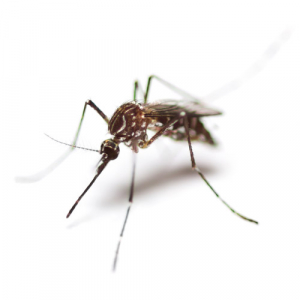
in Fort Hancock, Texas
Quickly and Easily get a FREE INSTANT quote for Mosquito Control services.
Choose the mosquito control treatment service for your home and yard.
Finalize order and let our professional mosquito technicians do the work!
Mosquito Control; Best Price, Service & Guarantee
Quickly and Easily get a FREE INSTANT quote for Mosquito Control service.
Lowest Price Guaranteed! We will beat ANY competitors rate and service.
Mosquito Control service with a FULL guarantee! If they come back, so do we!*
Our applicators are licensed, trained and insured mosquito control experts.
Get your yard back from mosquitoes with a variety of mosquito control options.
Fully licensed, insured and trained technicians provide expert mosquito control.
