Kingsville Mosquito Control
FREE, No Obligation Quote. Book Your Mosquito Control Service Online Now!
Get a FREE Instant Quote
Mosquito Control Service in Kingsville, TX.
FREE, No Obligation Quote. Book Your Mosquito Control Service Online Now!
Mosquito Control Service in Kingsville, TX.
If the mosquitoes come back, SO DO WE! That’s our service guarantee*
Finding a great Kingsville, TX. mosquito control service company will help you and your family enjoy your backyard! Mosquito season starts in early March and will continue through October! Prime time for barbeques, pool time and enjoying the outside!
Hiring a professional is critical to ensuring that you have the best results for mosquito control. There are many DIY options as well as systems, however – hiring a local mosquito control company in Kingsville will give you the best protection for your yard with a mosquito control barrier.
Kingsville is a city in the southern region of the U.S. state of Texas and the county seat of Kleberg County. Located on the U.S. Route 77 corridor between Corpus Christi and Harlingen, Kingsville is the principal city of the Kingsville Micropolitan Statistical Area, which is part of the larger Corpus Christi-Kingsville Combined Statistical Area. The population was 26,213 at the 2010 census, and in 2019 the U.S. Census Bureau estimated the population at 25,315.
Named in honor of Richard King, the city was founded to provide infrastructure for the adjacent King Ranch, as well as serve as the headquarters of the newly founded St. Louis, Brownsville and Mexico Railway. In 1904, the first tracks were laid and the first buildings constructed for the planned city. In 1911, the city was incorporated. It is home to Texas A&M University-Kingsville, a member of the Texas A&M University System, and Naval Air Station Kingsville, one of the U.S. Navy’s three locations for jet aviation training.

The history of Kingsville is closely intertwined with the city’s main creek, the Santa Gertrudis. The first recorded inhabitants of the area were the Coahuiltecan Malaquites, surviving on seafood from nearby Baffin Bay, with settlements along the Santa Getrudis and San Fernando creeks, and the Cayo del Grullo branch of Baffin Bay. Large herds of mustangs roamed the south Texas plains, often drinking from the waters of spring fed creeks in and around present-day Kingsville. In 1803, Jose Lorenzo de la Garza established a settlement along the Santa Gertrudis. In 1846, General Zachary Taylor and his army camped along the banks of the Santa Gertrudis prior to their campaign into Mexico. In 1899, after many failed attempts, King ranch manager Robert J. Kleberg, Jr., was finally able to tap into an underground lake of water. The discovery of readily accessible water paved the way for a future settlement next to the ranch.
With the continued growth of the King Ranch in the mid to late 19th century, the desire for a railroad through the region increased, both to connect the communities of the Rio Grande Valley to the rest of Texas, and to serve the King Ranch. At the turn of the 20th century, Henrietta King, widow of Richard King, deeded a portion of the ranch to entice the construction of a town and to bring a railroad adjacent to the ranch.Robert J. Kleberg, Jr. formed the Kleberg Town and Improvement Company in 1903, tasked with planning and constructing the town, at the bequest of his mother-in-law, Henrietta. In 1904, the community was planned three miles from the King Ranch headquarters and was named in honor of the founder of the King Ranch, Richard King. The community would also house the headquarters of the newly formed St. Louis, Brownsville and Mexico Railway, a deal that was reached with railroad magnate Benjamin Yoakum. The first buildings were constructed, track was laid through the town, and the first train passed through Kingsville on July 4, 1904, considered the founding date of the city. Kingsville’s first post office was also established that year.
By the close of the first decade of the 20th century, Kingsville already had a thriving business scene, with an active commercial club, that was the forerunner of the city’s chamber of commerce today. In 1909, a library was established, an opera house built in 1910, and by 1911, the city was incorporated and the first city government was chartered. Two years later, in 1913, Kingsville was named the county seat of the newly established Kleberg County. Around 1920, oil and natural gas were discovered near Kingsville, leading to the city’s first population boom.
Segregationalist policies and Jim Crow laws were present in Kingsville during the beginning of the 20th century. By the 1920s, three distinct segregated communities had emerged, the Spanish-speaking Tejano and migrant Mexican community of farm workers to the north, the African-American community that mostly worked the railroad to the south, and the Anglo-American community in the center of the city along the downtown region. Common practice in Anglo-American controlled towns in South Texas, in the early 20th century, was to create segregated neighborhoods, evidenced by the planning of separate schools and churches for the three segregated communities. The Ku Klux Klan had a presence in the town, boosting a mayor to election in 1922, and was responsible for the lynching of a visiting African-American physician from nearby Bishop in 1923.
In 1925, the South Texas Teachers College opened, one of only six normal schools in the entire state of Texas at the time, and the only south of College Station, Texas. The effort to open the school, led by King Ranch heir Caesar Kleberg and the city’s commercial club, had been delayed due to political considerations in the state legislature, and funding issues from World War I.
Later changing its name in 1929 to the Texas College of Arts and Industries (Texas A&I), then to Texas A&I University in 1967, the university went on to adopt its current name, Texas A&M University-Kingsville in 1993, after it joined the Texas A&M University System in 1989. In addition to offering a large swath of undergraduate and graduate degrees, the university is home to the National Natural Toxins Research Center, the Caesar Kleberg Wildlife Research Institute, and the Irma Lerma Rangel College of Pharmacy, the doctorate of pharmacy program for the Texas A&M University system.
During the national defense build up to World War II, local civic leaders and Congressman Richard Kleberg, another heir to the King Ranch, lobbied the War Department to choose Kingsville and other South Texas communities as a future site for a military airfield. In 1941, a naval air station opened in nearby Corpus Christi, after lobbying efforts by Congressman Kleberg, and began training pilots for the Navy and Marine Corps. Following Pearl Harbor and the United States’ entry into the war, the need for increased pilot training and additional auxiliary airfields led to the Navy selecting Kingsville as the site of one, among several other municipalities. Plans were drawn up in 1941 and, in 1942, the U.S. Navy opened the new training airfield, Naval Air Auxiliary Station Kingsville, just to the east of town. Following World War II, the field was placed into a mothball status, but reopened shortly thereafter in 1951, and has been continuously operating since. NAS Kingsville is one of three major Naval Aviation jet training facilities for the Navy, and has had a significant impact on the economy and Kingsville’s history.
Several major industries have called Kingsville home throughout the city’s history. In 1944, the Celanese Corporation opened a plant north of Kingsville that is still in operation today. In the early 1960s, Humble Oil and Refining Company, now known as Exxon, relocated a district office to Kingsville due to the city’s close proximity to nearby oil fields. Population steadily increased in Kingsville, peaking at just under 30,000 residents in the mid 1980s. Since that time, the city has experienced a mild economic slump, with the closing of Exxon’s district office, decreased enrollment at the university, and the decreased economic impact of the petroleum industry all cited as factors for the city’s decline.
Mosquitoes are usually just a nuisance, however they can lead to disease and even death. Most interactions with a mosquito lead to a bite; which leads to an allergic reaction from the mosquito’s saliva. The reality is that most people simply want to enjoy the outdoors, especially when it is their own backyard. NOMO Mosquitoes offers mosquito control services in Kingsville, TX.
Our teams help you get your outdoor spaces back with regular mosquito control spraying. The mosquito control service typically happens every 3-weeks and takes a couple of applications to see the full benefit. The life-cycle of a mosquito requires consistent interaction to ensure that the sprays and other baits eliminate adult mosquitoes, larvae and eggs.
If you are ready to get some of your space back, Kingsville Mosquito control can help! Get a real-time quote and schedule service instantly today! Get Quote NOW >>
Additional Resources
We have found a few local providers in Kingsville, TX that provide Mosquito Control service
This business listing service is provided by Yelp.com; all content and images are hosted on Yelp.com (https://*.yelpcdn.com/*), please direct ANY copyright infringement issues directly to Yelp.com at: https://www.yelp.com/support/contact/copyright_trademark
We have had to remove local listings due to copyright infringement violations by those companies through YELP. We will consider adding the listings again in the future once violations of material has been resolved by YELP.
If you need assistance in finding a quality Mosquito Control company in Kingsville, TX, please use the form at the top of the page to start.

Kingsville, TX. Standard Mosquito Control (Barrier):
The standard mosquito control treatment uses Pyrethroids; which are EPA approved chemicals that are designed to kill mosquitoes and create a barrier around your home. The chemical adheres to vegetation and remains intact for approximately 21-days. During this time, any mosquitoes that make contact with the residue will die. The Pyrethroids slowly dissolve, but remain very effective – this 21-day window is why our team returns every 3 weeks for additional treatment. This disrupts the life-cycle and controls the mosquito population in your yard.
Kingsville, TX. All-Natural Mosquito Control:
All-Natural mosquito control solutions do exist and while they aren’t as effective as the Pyrethroids, they are still extremely effective at killing mosquitoes and providing preventative options. The all-natural solution uses a strong garlic extract solution mixed with essential oils. The immediately impact is noticed as the scent and oils repel mosquitoes; however, once dried – the oils kill mosquitoes. The oils do not last as long as the standard treatments; which requires our team to treat your yard bi-weekly to ensure an all-natural barrier remains.
Kingsville, TX. Installed Mosquito Control Systems:
Installed mosquito systems are a great way to provide ongoing and consistent treatment, with remote options to trigger prior to using your backyard. The systems are usually designed to spray in areas mosquitoes like to hang out – and do offer a very effective option for treating your yard. Our teams can help provide basic maintenance of your system parts but can ensure that you do not run out of the chemicals used in your system – typically a concentrate that mixes with water (in barrel) or during system use.
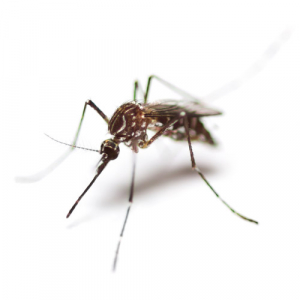
in Kingsville, Texas
Quickly and Easily get a FREE INSTANT quote for Mosquito Control services.
Choose the mosquito control treatment service for your home and yard.
Finalize order and let our professional mosquito technicians do the work!
Mosquito Control; Best Price, Service & Guarantee
Quickly and Easily get a FREE INSTANT quote for Mosquito Control service.
Lowest Price Guaranteed! We will beat ANY competitors rate and service.
Mosquito Control service with a FULL guarantee! If they come back, so do we!*
Our applicators are licensed, trained and insured mosquito control experts.
Get your yard back from mosquitoes with a variety of mosquito control options.
Fully licensed, insured and trained technicians provide expert mosquito control.
